U.S. Carrier Strike Group Positioning in Middle East as Iran Claims Drone Surveillance and Issues Hypersonic Threats

MIDDLE EAST - The United States positioned the USS Abraham Lincoln carrier strike group in the Middle East on January 17, in response to Iran’s suppression of nationwide protests and riots that erupted on January 8, resulting in estimates ranging from 3,117 according to state media to over 36,500 according to activist groups.
U.S. President Donald J. Trump announced on January 13 that aid was forthcoming for protesters. Iranian authorities imposed a near-total internet blackout and suspended visual flight rule operations nationwide from January 26, signaling heightened security measures.
The U.S. Department of State sanctioned entities facilitating Iran’s petroleum trade on January 15, aiming to pressure the Iranian government. Congressional assessments on January 14 highlighted risks of military escalation, while Iranian state media warned of retaliatory strikes on U.S. assets.
The USS Abraham Lincoln, accompanied by its strike group including destroyers and nearly 90 aircraft, redirected from the South China Sea to the Middle East.
This move followed Iranian threats broadcast on state television to target U.S. carriers entering territorial waters. The U.S. Department of War stated on January 5 that the positioning enhances force protection amid regional instability.
Protests and riots in Iran, triggered by economic grievances, faced a severe crackdown on January 8-9, with security forces deploying live ammunition and militarized units.
Opposition reports documented mass arrests and extrajudicial killings, while the government imposed communication restrictions to conceal the scale of violence. Amnesty International noted on January 8 that the response involved heavy weaponry, marking one of the deadliest responses since 1979.
U.S. sanctions targeted illicit petroleum networks on January 15, as part of efforts to isolate the Iranian government economically. Congressional hearings on January 12 discussed potential U.S. interventions, cautioning against strikes that could undermine diplomatic channels.
Last Known Position and Transit Analysis
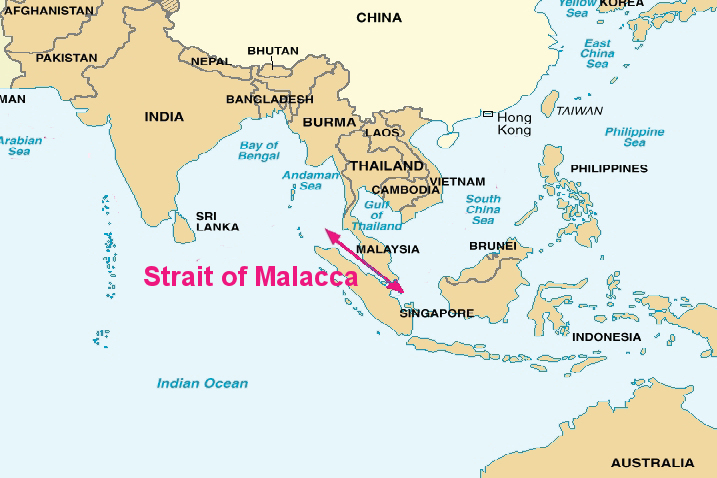
The last known position of the USS Abraham Lincoln carrier strike group, according to commercial Open Source Intelligence (OSINT) tracking data was in the Malacca Strait on January 20.
The vessel departed from San Diego and was en route to Port Naval, France, but the data is locked, limiting further details.
The U.S. Department of War stated the deployment enhances regional presence amid Iranian protests and riots, but no specific position updates beyond the Malacca Strait are available in official records.
The Malacca Strait connects the South China Sea to the Indian Ocean, a key route for vessels heading to the Middle East. From this position, the distance to the Gulf of Oman is approximately 2,800 nautical miles.
Carrier strike groups typically transit at speeds of 20-30 knots. At an average speed of 25 knots, the journey would take about 112 hours, or 4.7 days. From January 20, this projects an arrival around January 25. Actual time may vary due to operational factors, weather, or routing.
The projection assumes a direct route without stops or deviations. No official confirmation of arrival exists, and military vessels often disable AIS for security.
Full Report & Analysis
The full report includes expert analysis and risk assessment.
Full Report & Analysis →