IAEA: Drone Hits Kursk Reactor Cooling Tower, Tusk Warns of Hybrid Strikes On NATO Countries

EUROPE — The International Atomic Energy Agency said on September 18 that it had been informed a drone struck the cooling tower of a reactor unit at the Kursk Nuclear Power Plant in Russia early on Thursday.
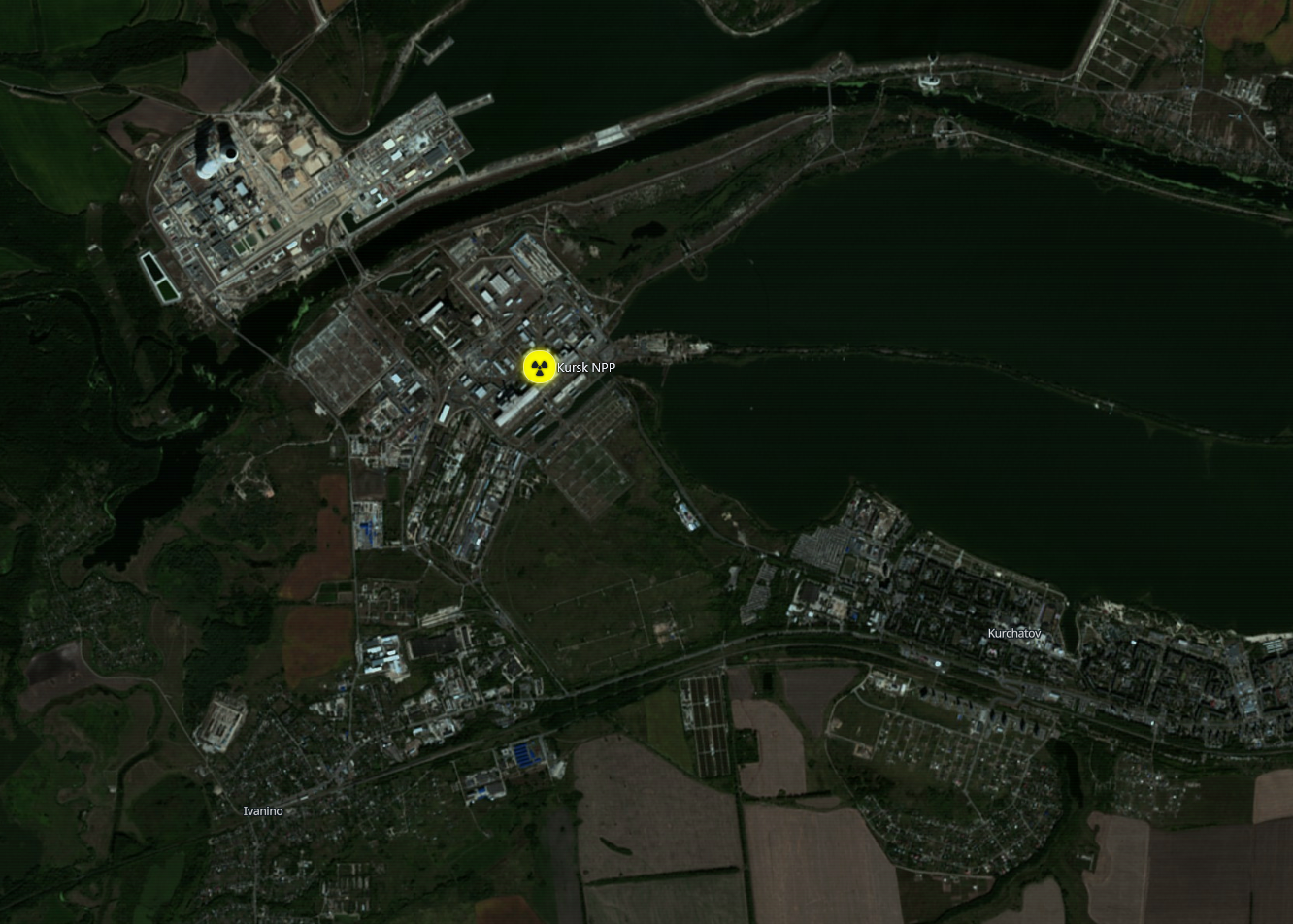
The agency said the unit was operating at the time, that its operating mode did not change, and that there was no fire.
IAEA Director General Rafael Mariano Grossi said all attacks on nuclear facilities are unacceptable because they could endanger nuclear safety and security wherever they occur, and he repeated a call for maximum military restraint to prevent a nuclear accident.
On the same day as the first notice, the 70th IAEA General Conference in Vienna adopted a resolution titled “Nuclear Safety, Nuclear Security, and Safeguards in Ukraine.”
Ukraine’s Ministry of Foreign Affairs said the text received 63 votes in favor, 6 against, and 46 abstentions.
The ministry’s comment on September 18, welcomed the vote, said Zaporizhzhya remains a Ukrainian plant that must return to Ukrainian control, and did not mention the Thursday Kursk cooling-tower event.
Polish Prime Minister: Intelligence Assessments Indicate Russia Plans Hybrid Drone, Missile Strikes On Countries Supporting Ukraine, Including Poland
On September 17, in a separate development, Polish Prime Minister Donald Tusk told the Sejm that intelligence assessments describe a Russian plan that includes hybrid drone and missile strikes on countries supporting Ukraine, including Poland.
He said there is a real risk that drones or other missiles may enter the territory of one or more NATO countries on the eastern flank and even cause destruction, and that the official narrative would present such events as accidents so that alliance members would treat Article 5 as theoretical rather than practical, adding that this is most likely scenario for the coming months and said he would travel to Ukraine the next day.
Tusk told the Parliament that, “These potential strikes would be quote-unquote ‘accidental’ in nature, intended to paralyze or at least weaken the resolve of NATO states to invoke the relevant NATO provisions in the event of aggression against a member country”.
Tusk was in Ukraine on September 18 for the first Carpathian Eight summit. President Volodymyr Zelenskyy welcomed the visiting leaders in Ukraine’s Carpathians and held a joint press conference with them.
Zelenskyy’s official statements that day addressed regional transport, energy, logistics, defense cooperation, and European Union-level work. They did not mention the Thursday Kursk cooling-tower event or Tusk’s Sejm forecast.
Latvia Says Thread Level In Country Has Not Changed But Daily Assessments Continue
On September 18, Latvia’s National Armed Forces said the threat level in Latvia and the region had not changed, that daily assessments continue rather than reactions to single incidents, and that the forces are prepared for provocations.
The command said the comprehensive national defense exercise Namejs is underway with allied units participating, that Operation Vilkatis continues in eastern Latvia, and that NATO airspace patrolling will be intensified ahead of the Saeima elections.
The same statement said alliance chiefs would discuss a joint response to further possible diversion and sabotage attempts at the NATO Military Committee conference in Copenhagen this weekend.
Locations Affected
-
Kursk Nuclear Power Plant, Kurchatov, Russia: IAEA-reported cooling-tower strike on an operating reactor unit. Coordinates 51.6764, 35.6064.
-
Zaporizhzhya Nuclear Power Plant, Enerhodar, Ukraine: IAEA team on site reports daily close-range military activity and a restored 330 kilovolt external line after a localized ceasefire in early September. Coordinates 47.5120, 34.5850 (approximate, plant complex).
-
Vienna International Centre, Austria: 70th IAEA General Conference, September 14-18, including the September 18 vote on nuclear safety in Ukraine. Coordinates 48.234, 16.417 (approximate).
-
Warsaw and the Poland-Ukraine border belt: Tusk’s September 17 Sejm warning and announced air-defense work at border crossings. Warsaw 52.2297, 21.0122.
-
Bukovel, Ivano-Frankivsk region, Ukraine: Carpathian Eight summit on September 18, with Tusk received by Zelenskyy. Coordinates 48.359, 24.411 (approximate).
-
Eastern Latvia (Latgale borderland): Namejs unmanned-system drills and Operation Vilkatis border security. Regional centroid 56.55, 27.00 (approximate).
-
Copenhagen, Denmark: NATO Military Committee conference, September 18-19. Coordinates 55.6761, 12.5683.
-
Riga and Lielvārde, Latvia: national command and allied air-base activity tied to Baltic Air Policing and the coming Saeima vote. Riga 56.9496, 24.1052. Lielvārde Air Base 56.778, 24.854 (approximate).
Latest Developments
-
The IAEA said on September 18 it had been informed a drone hit a Kursk reactor-unit cooling tower early Thursday, with the same three operator-side conditions later restated in the agency’s notice.
-
Director General Grossi called every attack on a nuclear facility unacceptable that same day and repeated a request for maximum military restraint.
-
The IAEA published no second Kursk notice after the September 18 text through the morning of September 19 UTC, and no Update 368 was on iaea.org.
-
The 70th IAEA General Conference adopted “Nuclear Safety, Nuclear Security, and Safeguards in Ukraine” on September 18, with Ukraine’s Foreign Ministry reporting 63 votes in favor, 6 against, and 46 abstentions.
-
Ukraine’s Foreign Ministry welcomed that resolution in a September 18 comment, restated that Zaporizhzhya must return to Ukrainian control, and did not mention Thursday’s Kursk cooling-tower notice.
-
Polish Prime Minister Donald Tusk told the Sejm on September 17 that intelligence assessments include hybrid drone and missile strikes on Ukraine’s supporters, including Poland.
-
The official story after any such incident, Tusk said, would be that it was an accident, and that the aim would be to make Article 5 look theoretical.
-
Tusk was in Ukraine on September 18 for the Carpathian Eight summit and was received by President Zelenskyy.
-
Zelenskyy’s September 18 official statements covered Carpathian transport, energy, logistics, and defense cooperation and did not address the Thursday Kursk hit.
-
Latvia’s National Armed Forces said on September 18 the national and regional threat level had not changed and that assessments update daily.
-
Namejs continues with allied units, Vilkatis continues in the east, and NATO air patrols will increase before the Saeima elections, the same Latvian command said.
-
NATO chiefs of defense opened a September 18-19 conference in Copenhagen on deterrence, innovation, and support for Ukraine.
-
IAEA Update 367 on September 17 recorded 13 drones near Khmelnytskyy, 8 near Rivne, 35 near South Ukraine (some as close as 0.9 miles, or 1.5 kilometers), and 48 near Chornobyl in the week that update covers.
Official Statements
-
International Atomic Energy Agency, September 18: “The IAEA has been informed that the cooling tower of a reactor unit of the Kursk Nuclear Power Plant in the Russian Federation was hit by a drone early on Thursday. It was reported that the unit was operating at the time, but its operating mode did not change and there was no fire.”
-
IAEA Director General Rafael Mariano Grossi, September 18: “all attacks on nuclear facilities are unacceptable as they could endanger nuclear safety and security, irrespective of where they occur.” The same notice said he “reiterates call for maximum military restraint to prevent the risk of a nuclear accident.”
-
IAEA Director General Rafael Mariano Grossi, Update 367, September 17: “The reconnection of this power line was a necessary step for nuclear safety and security, but serious risks remain. Further urgent measures are needed, including the delivery of additional diesel fuel to the site, to help ensure the plant’s essential safety and security functions can be maintained.”
-
IAEA Director General Rafael Mariano Grossi, Update 367, September 17: “The continued presence of military activity and drones near nuclear facilities further undermines the Seven Indispensable Pillars for ensuring nuclear safety and security during an armed conflict and the Five Concrete Principles for protecting the ZNPP.”
-
Ministry of Foreign Affairs of Ukraine, September 18: “The Ministry of Foreign Affairs of Ukraine welcomes the adoption by the 70th IAEA General Conference of the resolution “Nuclear Safety, Nuclear Security, and Safeguards in Ukraine.” The resolution was supported by 63 IAEA Member States; 6 voted against, and 46 abstained.”
-
Ministry of Foreign Affairs of Ukraine, September 18: “The plant remains a Ukrainian nuclear facility and must be returned to the full sovereign control of Ukraine and its competent authorities.”
-
Ministry of Foreign Affairs of Ukraine, September 18: “The seizure of a nuclear power plant by military force, its use for military purposes, and the prevention of the legitimate operator and regulator from fully exercising their authority are categorically unacceptable.”
-
European Union statement to IAEA General Conference agenda item 21, September 18: “The EU unequivocally condemns Russia’s war of aggression against Ukraine. We reiterate our call on Russia to comply with the IAEA General Conferences and Board of Governors resolutions. Russia must immediately and unconditionally withdraw its military and other unauthorized personnel and equipment from the ZNPP and from the entire territory of Ukraine, and return full control to Ukraine’s competent sovereign authorities.”
-
Polish Prime Minister Donald Tusk, Sejm, September 17: “The Russian plan, according to intelligence assessments ... includes hybrid strikes using drones and missiles on countries supporting Ukraine, including Poland.”
-
Polish Prime Minister Donald Tusk, Sejm, September 17: “There is a real risk that drones or other types of missiles may fly into the territory of one or more NATO countries on the eastern flank, even cause destruction.”
-
Polish Prime Minister Donald Tusk, Sejm, September 17: “These potential strikes would be quote-unquote ‘accidental’ in nature, intended to paralyse or at least weaken the resolve of NATO states to invoke the relevant NATO provisions in the event of aggression against a member country.”
-
President of Ukraine Volodymyr Zelenskyy, address to Carpathian Summit participants, September 18: “The Carpathians are not only beautiful, they’re also an important part of the strength of our countries and of Europe. The mountains that do not divide, but unite regions through major Carpathians transport and logistics routes. We developed strong cross-border trade and energy links here, and they are critical for our countries.”
-
President of Ukraine Volodymyr Zelenskyy, joint press conference with Carpathian Eight leaders, September 18: “We already cooperate extensively on our defense. As you know, we work together in energy and on export and import routes – this is very important. Logistics is one of our key priorities, especially during the war.”
-
Latvian National Armed Forces, September 18 (translated from Latvian): “The NBS continuously monitors the security situation, closely cooperating with allied intelligence and security agencies. The threat level in Latvia and the region has not changed. The situation assessment is updated daily, rather than only reacting to individual incidents.”
-
Latvian National Armed Forces, September 18 (translated from Latvian): “We are prepared for provocations. Comprehensive national defense exercises “Namejs” are taking place in Latvia, in which allied units are also participating. At the same time, Operation “Vilkatis” continues in eastern Latvia, and NATO airspace patrolling will be intensified ahead of the Saeima elections.”
-
Latvian National Armed Forces, September 18 (translated from Latvian): “This weekend, we will discuss the alliance’s joint response to further possible diversion and sabotage attempts at the NATO Military Committee in Copenhagen.”
-
Ukraine’s Ministry of Foreign Affairs and General Staff have published no official statement on the Thursday Kursk cooling-tower event as of September 18. The ministry did publish a nuclear-safety comment that day on the General Conference resolution and Zaporizhzhya. The presidency’s Carpathian statements that day also did not mention the Kursk event.
-
Rosenergoatom and the Russian Ministry of Foreign Affairs have published no statement matching the September 18 IAEA wording as of September 18.
-
The Russian government has published no statement answering Tusk’s September 17 Sejm remarks as of September 18.
Full Report & Analysis
The full report includes expert analysis and risk assessment.
Full Report & Analysis →